
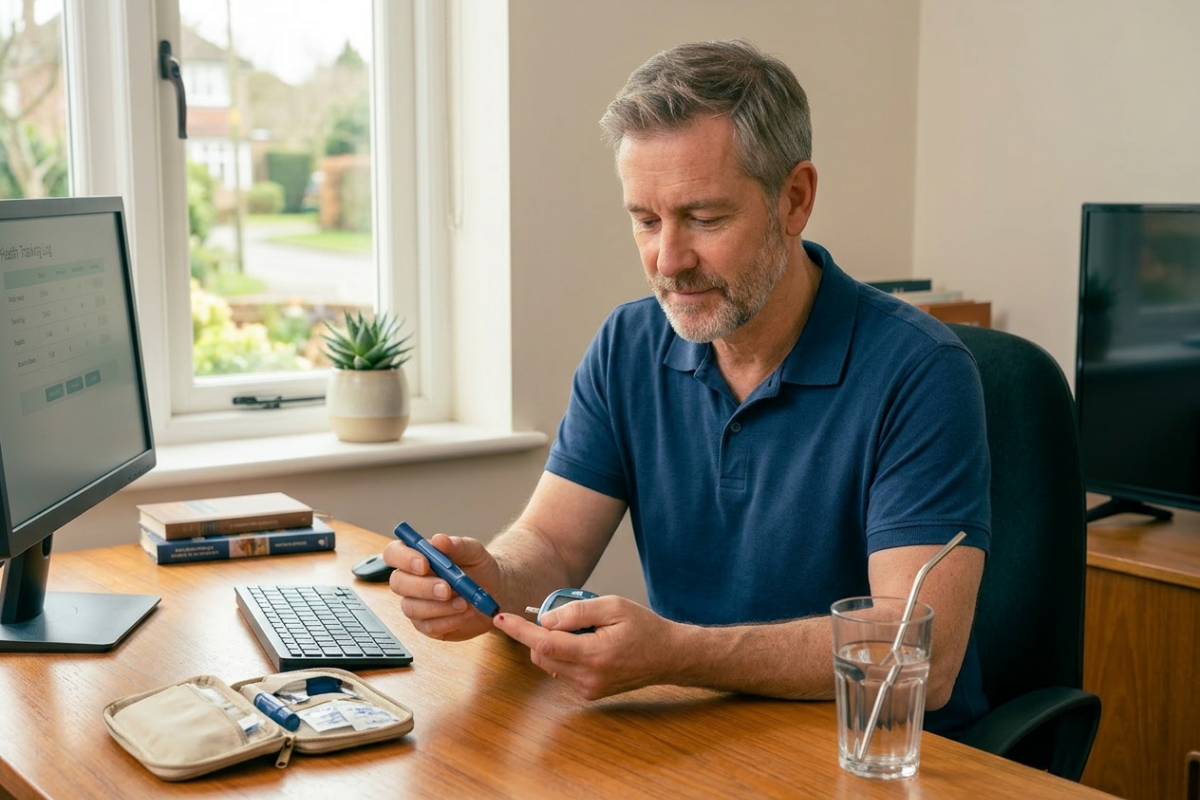
Checked your blood sugar and didn’t like the number? Take a breath.
One high reading is not a failure. It’s information. And when you have a clear plan, you can respond calmly and safely.
For people living with diabetes, high blood sugar (hyperglycemia) can happen — especially during stress, illness, dehydration, medication changes, or higher-carb meals.
What Counts as Elevated?
- Over 130 mg/dL fasting
- Over 180 mg/dL after meals
If your readings are consistently above these ranges, connect with your Health Coach to review your plan and make adjustments.
If your glucose is above 250 mg/dL for several readings, it’s time to take action. This may indicate that your body needs additional support—through nutrition, hydration, movement, and closer monitoring—to help bring levels back into range.
Common Reasons for High Readings
- Larger portions or higher-carb meals
- Illness or infection
- Stress
- Dehydration
- Missed or delayed medication
- Steroid medications
- Less movement than usual
Sometimes you know the cause. Sometimes you don’t. Either way — focus on the next step.
In rare cases, prolonged high blood sugar can lead to diabetic ketoacidosis (DKA). The key is catching it early.
What Is DKA?
DKA occurs when the body can’t use glucose effectively and begins breaking down fat for energy. This produces ketones, which can build up and become dangerous.
It is serious — but preventable with early action.
Watch for These Symptoms (Take Action Early)
- Blood sugar consistently above 250 mg/dL
- Moderate or large ketones
- Nausea or vomiting
- Abdominal pain
- Rapid or deep breathing
- Fruity-smelling breath
- Extreme fatigue or confusion
Go to the ER Immediately If You Have:
- Blood sugar above 300 mg/dL that is not coming down with usual measures
- Moderate or large ketones with symptoms
- Persistent vomiting (more than 2 hours or unable to keep fluids down)
- Severe abdominal pain
- Rapid, deep, or labored breathing
- Confusion, unusual drowsiness, or difficulty staying awake
- Signs of severe dehydration (dizziness, inability to keep fluids down, very little urination)
When in doubt, seek care. Early treatment prevents complications.
Your High Blood Sugar Action Plan
If your glucose is above 250 mg/dL for several readings:
1. Hydrate
Drink 8–16 oz of water every hour.
High blood sugar can lead to dehydration because your kidneys use more water to flush out excess sugar through urine, causing fluid loss. At the same time, dehydration can make blood sugar more concentrated and harder to manage. This creates a cycle where each one can make the other worse. Water helps your kidneys flush excess sugar and supports balance. If you have a medical condition that requires limiting fluids or another health concern, be sure to talk with your healthcare provider about what’s right for you before increasing your water intake.
Avoid sugary drinks, as they can quickly raise blood sugar and contribute to dehydration.
2. Check for Ketones
If your blood sugar is over 240 mg/dL — especially if you feel unwell — check for ketones.
You can buy over-the-counter urine ketone strips or a blood ketone meter at most pharmacies and use them at home.
Ketones are acids that can build up when the body isn’t using glucose effectively for energy. While DKA is more common in type 1 diabetes, it can occur in type 2 diabetes during illness, dehydration, or prolonged high readings.
If ketones are moderate or large — or you’re unsure how to interpret the result — contact your healthcare team right away.
If ketones are elevated and symptoms worsen, seek emergency care.
Note: If you follow a low-carbohydrate or ketogenic diet, you may have small amounts of ketones present even when you are well. This is different from dangerous levels of ketones seen in diabetic ketoacidosis (DKA), which are typically higher and occur alongside symptoms or elevated blood sugar.
3. Light Movement (When Appropriate)
If ketones are negative (urine: 0 mg/dL) or below 0.6 mmol/L (blood) and you feel well, a short walk or light movement may help lower blood glucose levels.
If ketones are trace to small (urine: ~5–15 mg/dL) or still below 0.6 mmol/L (blood) and you feel well, light movement is generally okay (this can occur with low-carbohydrate eating).
If ketones are moderate to large (urine: ~40 mg/dL or higher) or 0.6 mmol/L or higher (blood), avoid exercise. Exercising at higher ketone levels can increase stress on the body and may worsen ketone buildup and blood sugar levels.
| Level | Urine Ketones (mg/dL) | Blood Ketones (mmol/L) | What It Means | Action |
|---|---|---|---|---|
| Negative | 0 | < 0.6 | Normal | Safe for light movement |
| Trace | ~5 | < 0.6 | Low | Light movement okay if feeling well |
| Small | ~15 | < 0.6 | Low | Light movement okay if feeling well |
| Moderate | ~40 | 0.6 – 1.5 | Elevated | Avoid exercise, monitor closely |
| Large | ~80 – 160 | 1.5 – 3.0+ | High / Concerning | Contact healthcare team |
| Very High | — | > 3.0 | Medical emergency (possible DKA) | Seek emergency care |
4. Recheck
Monitor your glucose every 2–3 hours.
If you see a reading above 350 mg/dL, connect with your care team for additional support.
Sick Day Reminder
Illness can raise blood sugar — even if you’re eating less.
If sick:
- Check glucose every 2–4 hours
- Check ketones if glucose is above 250 mg/dL
- Sip fluids regularly
- Seek care if you cannot keep fluids down
Sending Health Your Way!
The Tula Clinical Team
Reviewed by:
Aubree RN, BSN
Austin MS, RDN, CSR, LDN, CD
Gaby MD (Venezuela)
Tula Takeaways |
|---|
| 1. Stay Positive: Remember, high glucose readings are signals to take action, not personal failures. |
| 2. Take Action on Highs: For repeated readings above 250 mg/dL, hydrate and monitor; if over 300 mg/dL and not improving, contact your care team and check ketones, especially if you’re sick. |
| 3. Know Emergency Signs: Be aware of symptoms that require immediate medical attention. |



The LIVE TULA blog is informational and not medical advice. Always consult your doctor for health concerns. LIVE TULA doesn’t endorse specific tests, products, or procedures. Use the information at your own risk and check the last update date. Consult your healthcare provider for personalized advice.